The Line You Think Doesn’t Matter – Until It Does
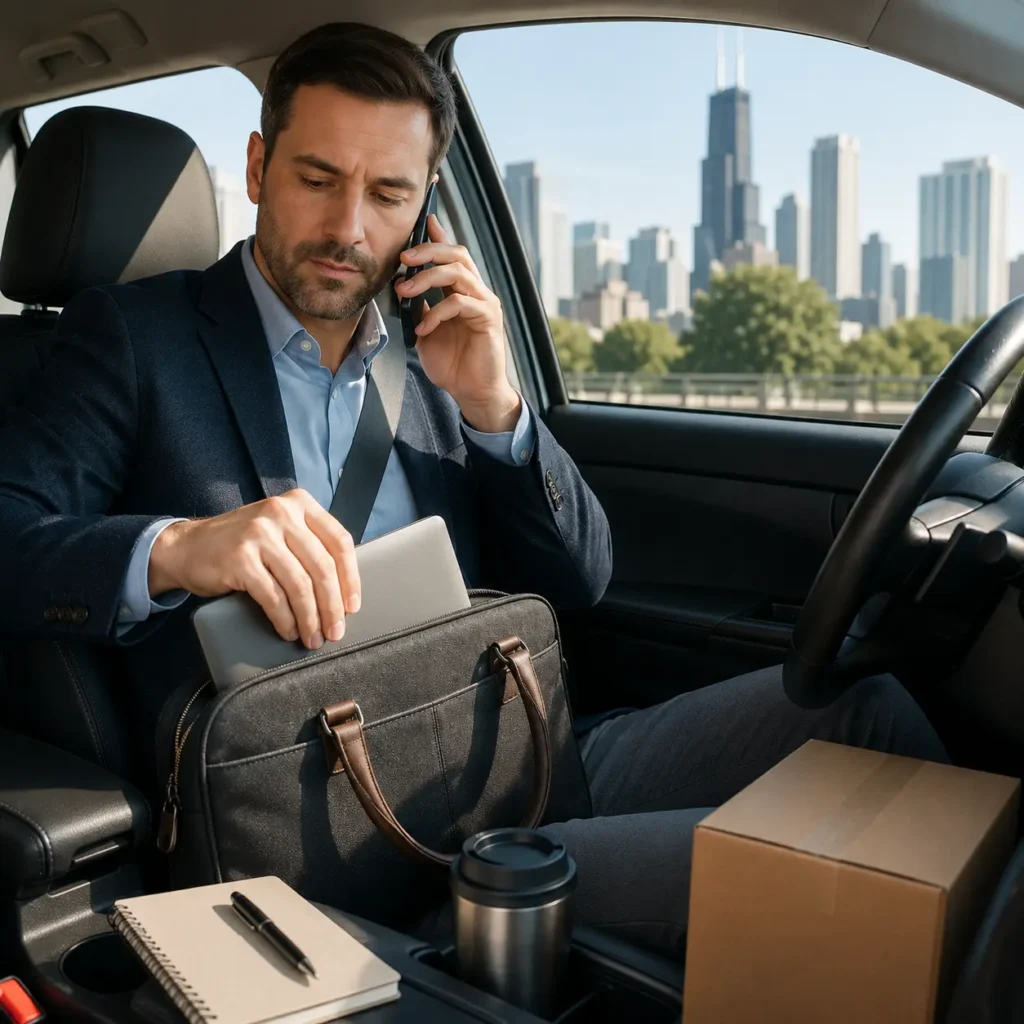
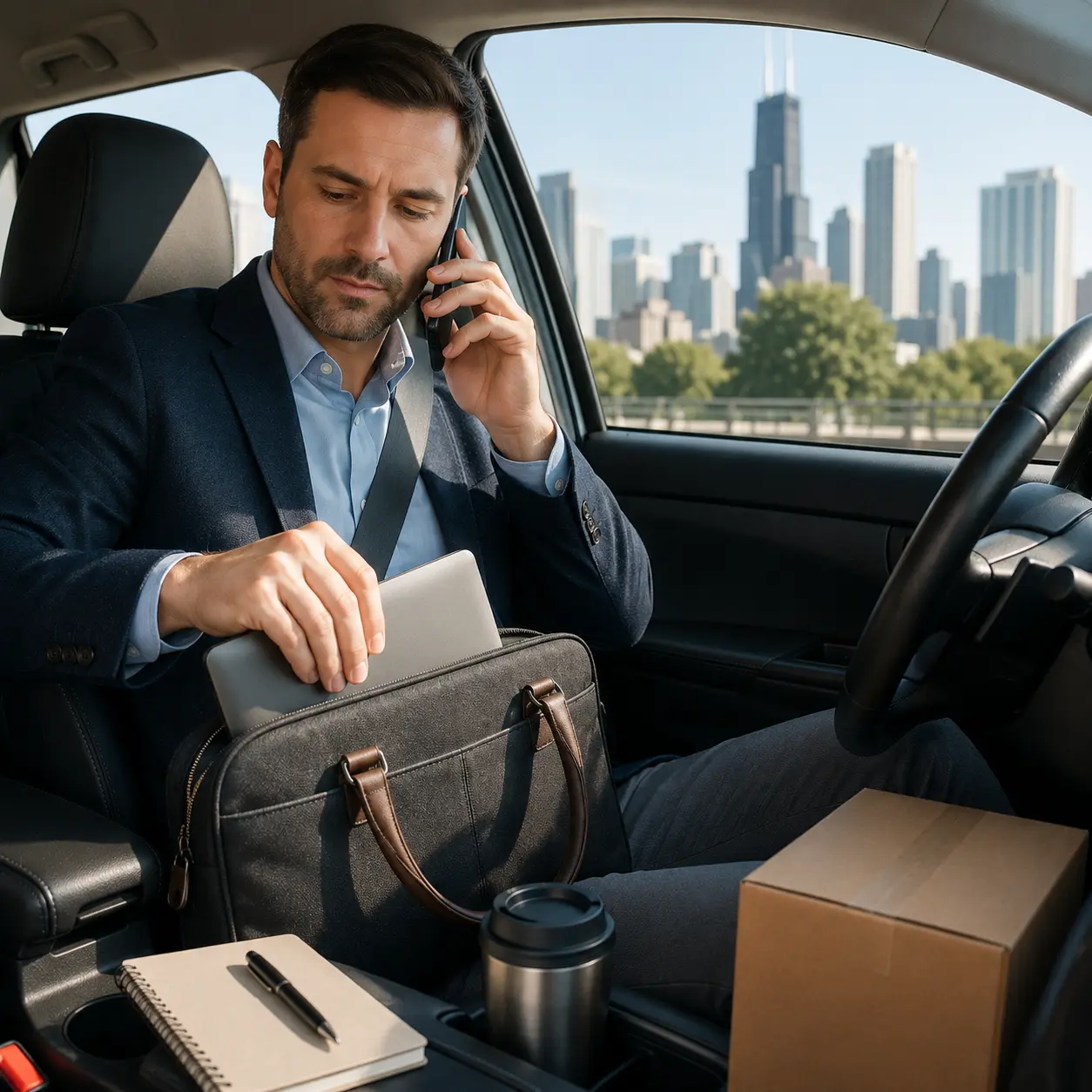
If you’re a freelancer, a consultant, or a small business owner in Chicago or anywhere in Illinois, your personal and professional life blend together constantly. You run a delivery on your way home. You take a client call from your car between job sites. You pick up supplies on a Saturday morning. It all feels like one continuous life.
Insurance companies don’t see it that way. They draw a hard, contractual line between personal and commercial use and if you’re on the wrong side of it when an accident happens, your personal auto policy insurance in Chicago may provide zero coverage. Not reduced coverage. None. Understanding exactly where that line sits is just as important as understanding the gaps hidden inside “full coverage” policies because for small business owners, the exclusion is often far more specific and far more costly than most people realize.
1. The Business Use Exclusion: It’s Broader Than You Think
Standard personal auto policies contain an explicit commercial use exclusion. People assume this only applies to rideshare drivers Uber, Lyft, delivery apps. It applies to far more than that.
The exclusion doesn’t require you to be a paid delivery driver. It applies whenever a court or insurance adjuster can reasonably determine that your vehicle was being used to further a business purpose at the time of the accident. Practically, that covers a wide range of everyday driving that working adults in Chicago do constantly:
- Driving to pick up supplies or materials for a job
- Traveling between two job sites or client offices
- Making a product delivery to a customer
- Meeting a client at their location
- Running a business-related errand during what would otherwise be a personal trip
Under Illinois law, commercial auto insurance is required for vehicles that are owned and primarily operated for business purposes. But the critical issue for most small business owners and freelancers isn’t whether they need a full commercial fleet policy; it’s the overlap zone: a personal vehicle used sometimes for personal driving and sometimes for work.This is a critical distinction from the coverage gaps we’ve discussed in the context of umbrella insurance. An umbrella policy extends coverage that already exists. A business use exclusion eliminates coverage from the outset; there is nothing for an umbrella to sit on top of if the underlying claim is denied.
Why Hire an Auto Accident Lawyer in Chicago: If your claim has been denied based on a business use exclusion, an experienced personal injury and coverage attorney can examine the specific circumstances of the trip and challenge whether the exclusion genuinely applies. The line between commuting and commercial use is not always as clear-cut as insurers claim, and a skilled lawyer knows how to fight back against wrongful denials.
2. The Employer’s Risk: When Your Employee’s Accident Becomes Your Lawsuit
The exposure doesn’t stop with your own driving. If you have employees who use their personal vehicles to run business errands picking up office supplies, making deliveries, traveling to meet a client your business can be held liable for any accident they cause while doing so. This is known as vicarious liability, and it is one of the least understood risks in small business insurance.
Vicarious liability works on a straightforward principle: if a person causes harm while acting on behalf of another party, like in this case, a business, the business can be held legally responsible for the resulting damages.
Without a Hired and Non-Owned Auto (HNOA) policy in place, a single accident caused by an employee or assistant running a routine errand can result in a lawsuit directed at your business that is the one with no insurance backing it. The financial exposure in these cases is not capped by anyone’s personal auto limits. It is determined by the severity of the accident and the damages a court or settlement assigns, and it comes directly out of your business’s assets.
This mirrors the asset-exposure logic we covered in our breakdown of why every household needs liability limits that match their net worth except here, it’s your business’s net worth on the line, not just your personal finances.
Why Hire an Auto Accident Lawyer in Chicago: If your business is facing a vicarious liability claim from an employee’s accident, a Chicago insurance coverage attorney can assess whether an HNOA policy applies, whether the employee’s own coverage should respond first, and how to structure your defense to limit exposure.
3. Finding the Right Balance: You Probably Don’t Need a Fleet Policy
The solution is rarely as expensive as business owners assume. Most freelancers, consultants, and small business owners do not need a full commercial fleet policy. In many cases, the fix is a simple and is usually one of two things, depending on your situation:
A Business Use Endorsement added to your personal auto policy:
This is a relatively low-cost addition that modifies your existing personal policy to cover business driving. It eliminates the coverage question of what you were doing at the moment of an accident. The cost is a fraction of a standalone commercial policy, and it can often be added in a phone call to your current insurer.
This endorsement closes the exclusion gap. Whether you’re driving to the grocery store on a Saturday or to a client meeting on a Tuesday, the same policy responds. There is no longer a question of which “version” of your driving was happening at the moment of the accident; the coverage follows you regardless.
An HNOA policy for employers:
For business owners with employees who occasionally drive their own vehicles for work purposes, pairing this endorsement with an HNOA policy closes both sides of the exposure of your own driving and theirs. HNOA policies through Illinois insurers are available at costs that most small businesses can absorb easily, and they can be bundled with general liability coverage in many cases.
Why Hire an Auto Accident Lawyer in Chicago: Reviewing your current policy structure against your actual driving and business operations is exactly the kind of proactive audit an insurance coverage attorney can perform before a denied claim forces the conversation. Calling your current insurer to ask specifically about a Business Use Endorsement takes less than 30 minutes. The cost of that conversation is almost always far less than the cost of discovering an uninsured accident later.
The Rule that Protects Personal Injury Victims: Audit Your Mileage Before the Insurance Company does
The 10% Rule Worth Knowing!
Take an honest look at your driving habits over the past month. If more than 10% of your total mileage, excluding your regular commute, is business-related, your personal auto policy likely has a gap that a single accident could expose.
Call your insurance agent and ask specifically about adding a Business Use endorsement, or whether you need an HNOA policy if you have employees driving on your behalf. The cost of closing this gap is almost always small. The cost of discovering it after an uncovered accident is one of the fastest ways a small business fails.
Insurance companies will use any excuse to minimize or deny your claim, especially when business use is involved. Carlson Bier Associates has recovered over $5 million in auto accident cases and holds a 4.9-star client rating. If you’ve been in an accident while conducting business or your business is facing liability from an employee’s accident contact us for a free case consultation. We know how to navigate the complexities of auto policies, commercial exclusions, and health insurance subrogation to ensure you get the maximum compensation you deserve.
Call us at 312-622-2900